The Mom Test: How to Get Honest User Feedback (Instead of Lies)
Published on: 28 March 2026
What is The Mom Test in user research?
The Mom Test is a user research method that helps you get honest feedback by avoiding opinion-based questions. Instead of asking what people think, it focuses on their real past behavior, problems, and actions — which leads to more reliable insights for validating ideas.
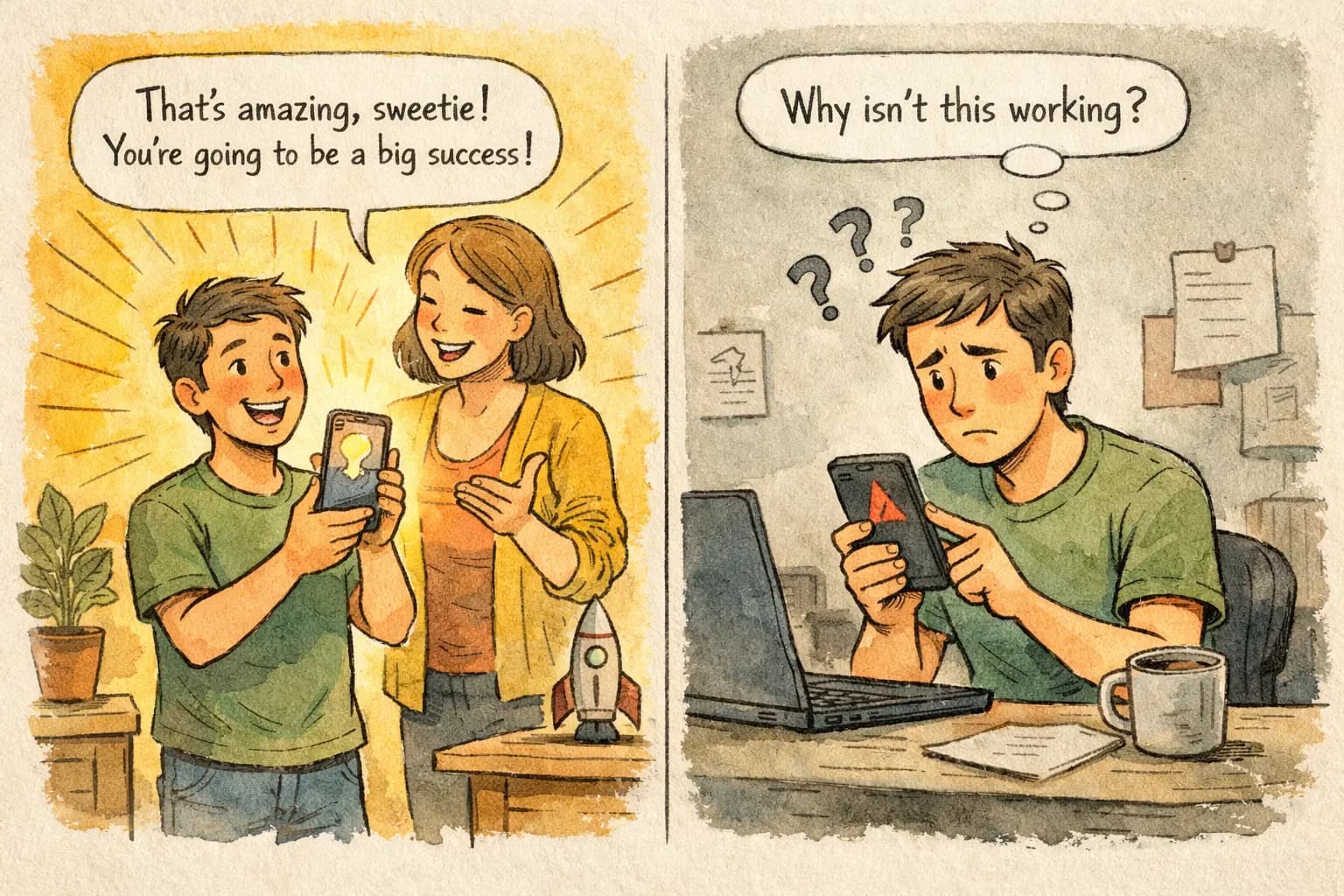
You show your idea to your mom.
She smiles instantly — “This is amazing!”
And in that moment, you feel unstoppable.
That feeling?
It's exactly what will kill your product.
Because the problem isn't your mom.
The problem is how humans respond to ideas.
And if you don't understand this, you'll build something nobody actually needs.
Why do users give false feedback?
Nobody wants to hurt your feelings.
Especially when you're excited, passionate, and clearly invested in your idea.
So instead of truth, you get something else: polite validation.
People say what feels right in the moment — not what's actually true.
Here's why:
- They don't want to offend you
- They feel pressure being put on the spot
- They're not fully aware of their real behavior
- They misunderstand the question
- Their memory is flawed
Why bad user feedback destroys startup ideas
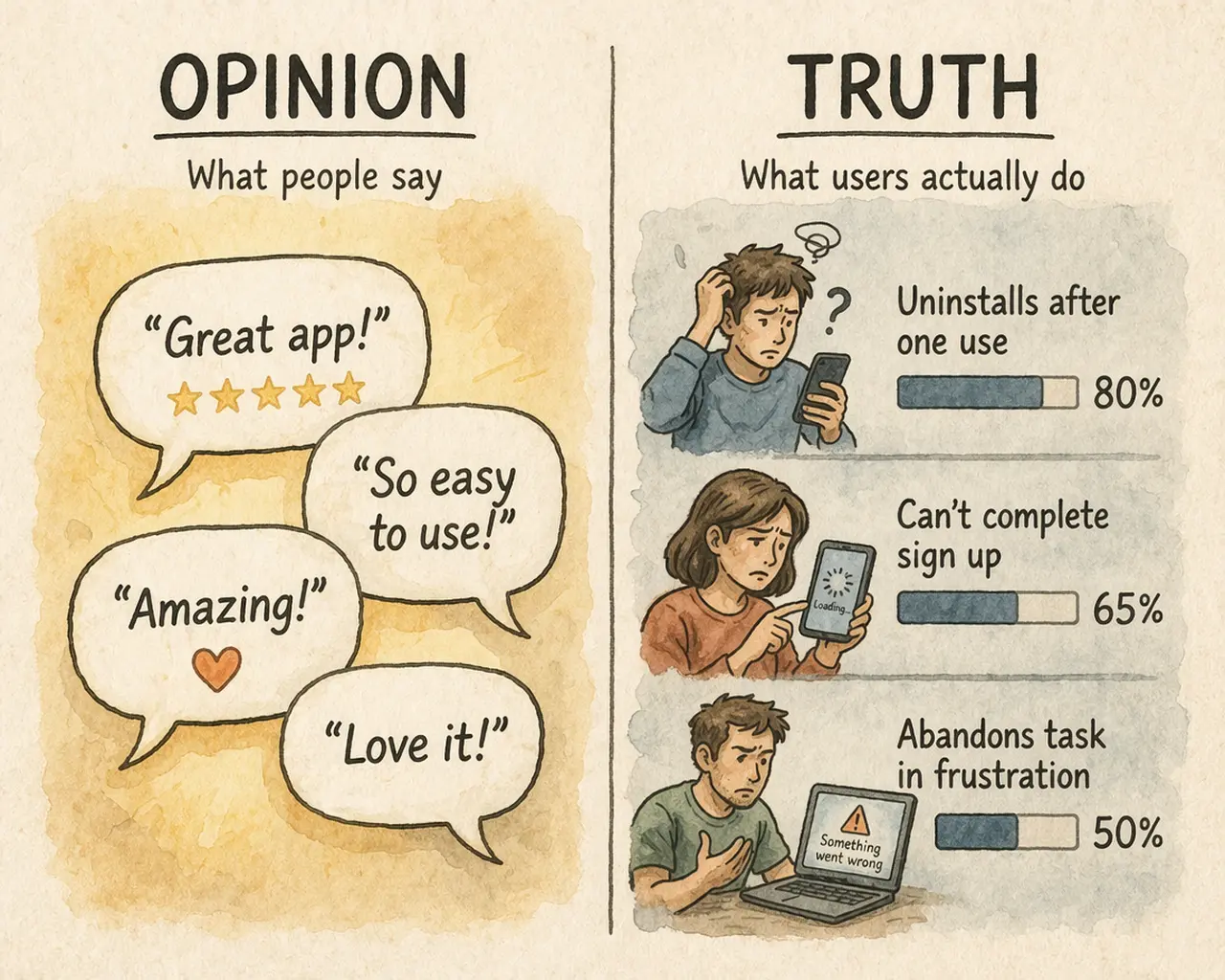
You collect positive feedback and think:
“People love this idea.”
So you build it.
Weeks or months later — no one uses it.
Why?
Because you validated opinions, not reality.
This is called confirmation bias — hearing what you want instead of what's true.
What is The Mom Test and how does it work?
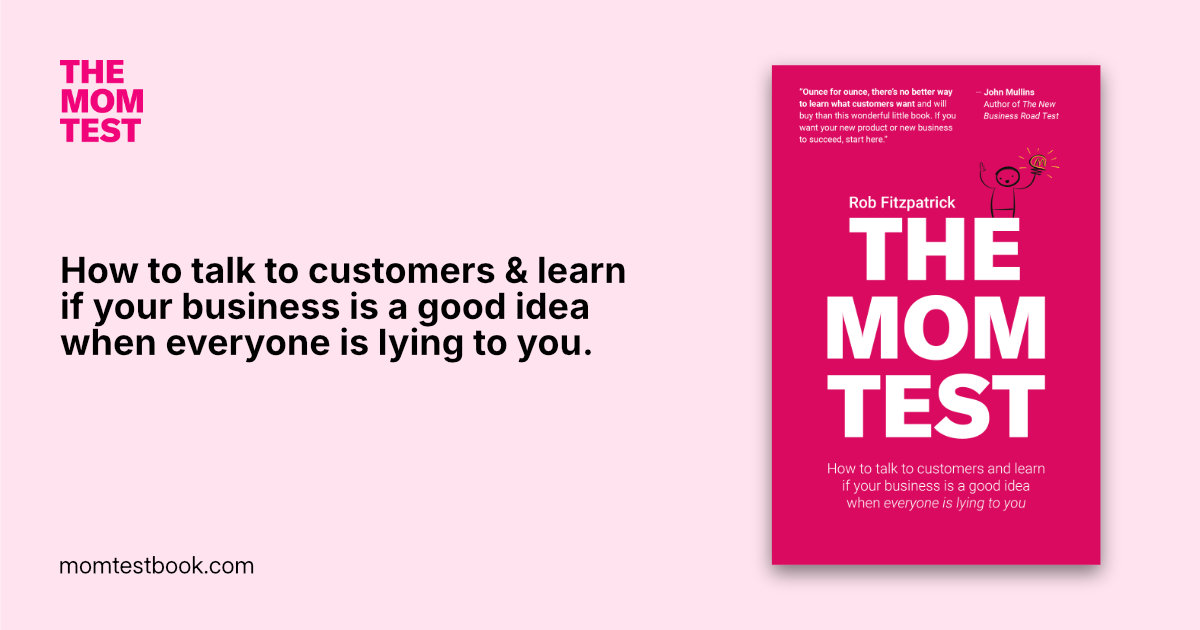
The concept comes from Rob Fitzpatrick, author of The Mom Test.
The idea is simple:
Ask questions in a way where even your mom can't lie to you.
Not because she wants to lie — but because your questions remove the chance of fake answers.
The core principles:
- Talk about their life, not your idea
- Ask about specific past behavior, not future guesses
- Listen more than you talk
How to use The Mom Test in user interviews
Here's how to apply it in real conversations:
Step 1 — Don't pitch your idea
The moment you explain your idea, bias begins.
Step 2 — Focus on the problem
Users understand problems better than solutions.
Step 3 — Ask about real past behavior
“What did you do last time?” is better than “Would you use this?”
Step 4 — Dig deeper
Don't accept surface-level answers. Ask “why” multiple times.
Why design fails when you ignore real user behavior

Sometimes, the best way to understand user experience (UX) is not through apps… but through real life.
A designer carefully plans a walking path.
- It's clean
- It's structured
- It follows a “logical” route
But what do people do?
They ignore it.
Instead, they walk straight across the grass — creating a dirt path over time.
That path is called a desire path.
And it reveals something critical:
Users don't follow your design.
They follow what's easiest for them.
What this teaches about user experience (UX)
This is exactly what happens in your product.
You design:
- perfect flows
- beautiful screens
- well-thought-out interactions
But users?
They:
- skip steps
- get confused
- find workarounds
- or just give up
Your “designed path” ≠ their “actual path”
What are good Mom Test questions to ask users?
When a user suggests something, go deeper:
- Why do you want that?
- What would that help you do?
- How are you solving this today?
- When did this last happen?
- What's the hardest part about this?
These questions uncover truth, not guesses.
Real example of The Mom Test (WhatsApp UX problem)

You give your phone to your mom and ask:
Send an image from WhatsApp to someone.
She tries.
She looks around.
She pauses.
She taps random icons.
And then… she gets stuck.
If you had asked:
“Is this app easy to use?”
She would've said:
“Yes, it's fine.”
But her behavior tells the truth.
What users do > what users say.
How to validate a startup idea using The Mom Test
Use this simple checklist:
- Talk to users before building anything
- Ask about real problems they already face
- Look for repeated patterns across multiple people
- Avoid pitching your solution too early
- Validate pain, not ideas
What is the biggest mistake in user research?
Bad user research is worse than no research.
Because now you're not guessing.
You're confidently wrong.
And that's much harder to fix.
Key takeaways
- Ask about real behavior, not opinions
- Never ask “Do you like this idea?”
- Focus on problems, not solutions
- Observe actions, not just answers
- Better questions → better products
FAQ
What is The Mom Test in simple terms?
It's a way to ask users questions so they give honest answers based on real behavior instead of polite opinions.
Why do people lie in user interviews?
They don't want to offend you, feel pressured, or don't fully understand their own behavior.
How do you validate a startup idea without building it?
Talk to users about their real problems, past behavior, and current solutions before building anything.
What are examples of bad user research questions?
“Do you like this idea?” or “Would you use this?” — these lead to fake validation.
What matters more: user words or behavior?
Behavior matters more. What users do reveals the truth, while words can be misleading.
What to do next
Before your next product decision, don't pitch your idea.
Ask better questions. Listen carefully. Focus on real behavior.
Because the truth is already there — you just need the right way to uncover it.
Suggested links
External:
The Mom Test by Rob Fitzpatrick
A practical guide to talking to customers and learning if your business is a good idea when everyone is lying to you.
Mom Test